We are delighted to announce the 3rd Annual Lucille Clifton Poetry Chair at the Community of Writers. Congratulations to Kazim Ali who will hold the Lucille Clifton Poetry Chair in 2026. We bestow this distinction on Kazim as he prepares to join us as staff poet at this summer’s Poetry Program in Olympic Valley.
Kazim Ali met Lucille Clifton on his 24th birthday, while still a graduate student at the University at Albany when she came to campus as a visiting writer. He later studied with her at the Community of Writers in the summer of 1998, and, over the years, published several critical essays on her work. He remained friends with her the rest of her life, seeing her for the last time shortly before her passing during one of her visits to their mutual hometown, Buffalo, NY. She is one of two people on the planet who are allowed to call him “Kaz.”
Lucille Clifton was one of the most distinguished, decorated and beloved poets of her time. She won the National Book Award for Poetry, a Lannan Literary Award, and the Robert Frost Medal from the Poetry Society of America. She served as a Chancellor of the Academy of American Poets from 1999 to 2005, and in 1987, she became the first author to have two books of poetry – Good Woman and Next – chosen as finalists for the Pulitzer Prize in the same year. She was also the author of eighteen children’s books, and in 1984 received the Coretta Scott King Award from the American Library Association.
She was a staff poet of the Community of Writers for nearly twenty years, first in 1991 and returning regularly until her death in 2010.
In recent years Kazim has become perhaps the world’s preeminent scholar of Clifton’s vast catalog of poetry. In 2022 he led a short course in the Writers’ Annex – The Poetry & Poetics of Lucille Clifton. Much of the research that went into this course served as the groundwork for the book Black Buffalo Woman (BOA Editions, 2025), for which he won the prestigious 2025 Poetry Foundation Pegasus Award for Poetry Criticism. In 2025 he also taught a follow-up course in the Writers’ Annex, More on the Poetry & Poetics of Lucille Clifton.
US Poet Laureate Ada Limón says, of Black Buffalo Woman, “There are few joys as authentic as witnessing one poet praise and honor another. Lucille Clifton is one such poet that deserves all the praise from those of us who attempt to wander in her wake. In Black Buffalo Woman, Kazim Ali allows for not only the elucidation of Clifton’s poems, but for their illumination. Each thoughtful essay lifts her poems to the light and returns you to Clifton’s brilliance and power.”
Certainly Kazim Ali is a deserving recipient of this honor, which is made possible by a generous donor who is committed to nurturing Lucille’s memory as well as her work, values, and influence on poetry.
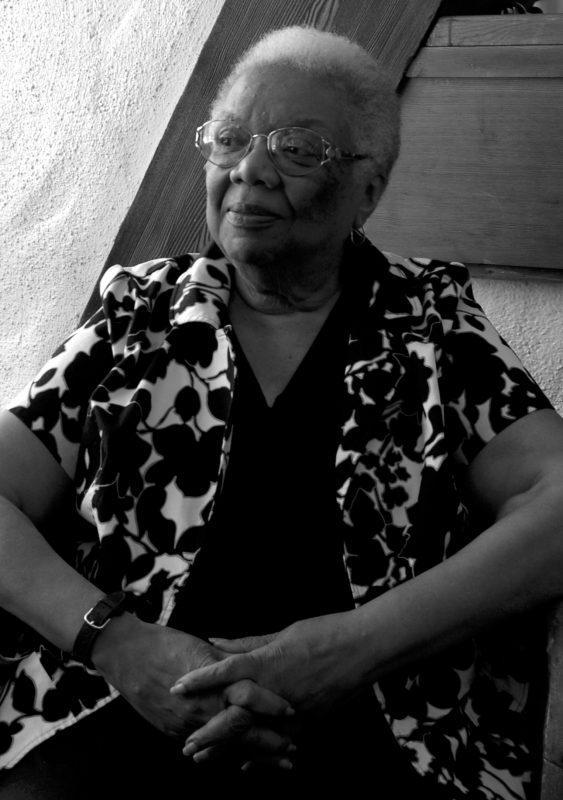
Photo by Tracy Hall

Photo by Jesse Sutton-Hough